Surface roughness is very important for most surfaces involved in sliding contact. This is because factors such as the original rate of wear and sustained nature are highly dependent on this characteristic. These surfaces are generally load-bearing surfaces, and the roughness needs to be marked to ensure the suitability of the intended use.
Definition of Surface Roughness
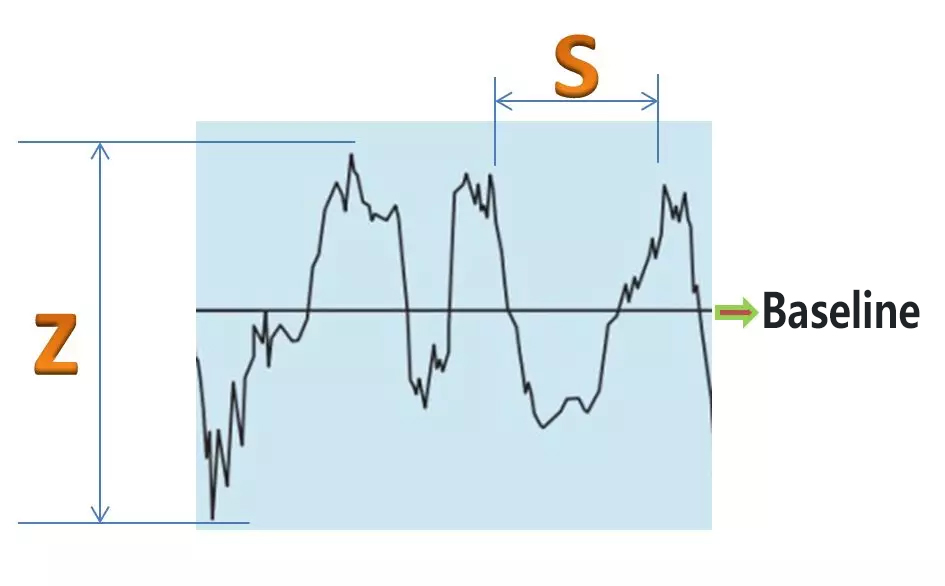
Surface Roughness (SR) is the roughness of surface in our daily measurement, which can be understood as the unevenness of fine pitch and tiny peaks and valleys in the process of processing products. It is usually defined as the tiny distance (wave distance) between two peaks or two trough fingers. In general, the wave distance is within 1mm or less, and it can also be defined as the measurement of micro-profiles, commonly known as micro-error value . We generally evaluate that there will be a baseline for roughness. The highest point above the baseline is called the peak point, and the lowest point below the baseline is called the valley point. Then the height between the peak and the valley is expressed by Z; The distance between the microtextures of the processed product We use S to express. Under normal circumstances, the size of the S value is defined in the national verification standard:
S<1mm is defined as SR 1≤S≤10mm is defined as SR China's National Metrology Verification Standard stipulates: Normally, the three parameters of VDA3400, Ra, and Rmax are used to evaluate the verification surface roughness, and the unit of measurement is usually expressed in μm.
Evaluation Parameter Relationship
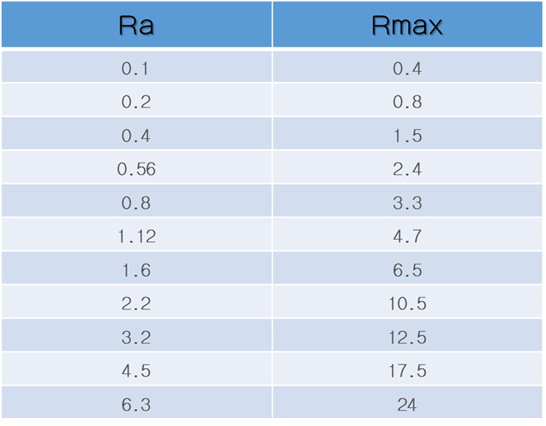
Ra is defined as the average arithmetic deviation (average roughness) of the curve, Rz is defined as the average height of the unevenness, and Ry is defined as the maximum height. The maximum height difference Ry of the micro-profile is also expressed by Rmax in other standards. Please refer to the following table for the specific relationship between Ra and Rmax:
Table: Comparison of Ra and Rmax parameters (μm)
How Is It Formed?
The formation of surface roughness is caused by the machining process of the workpiece. The processing method, the material of the workpiece, and the process are all factors of the surface roughness of the image. For example: During the electric discharge machining, the surface of the machined part has discharge irregularities. The processing technology and the material of the parts are different, and there are various differences in the micro marks left on the surface of the processed parts, such as (density, depth, shape change, etc.).
Effect Of Surface Roughness On Workpiece
Workpiece wear resistance Fit stability Fatigue strength Corrosion resistance Tightness Contact stiffness measurement accuracy … The coating, thermal conductivity and contact resistance, reflection ability and radiation performance, resistance to the flow of liquids and gases, and the circulation of current on the surface of the conductor will all have varying degrees of influence.
Evaluation Basis
①Sampling length The unit length of each parameter, the sampling length is the length of a reference line for evaluating the surface roughness. Under the ISO1997 standard, 0.08mm, 0.25mm, 0.8mm, 2.5mm, and 8mm are generally used as the reference length. ②Evaluation length Consists of N reference lengths. The surface roughness of each part of the surface of the component can not truly reflect the real parameter of roughness on a reference length, but it needs to take N sampling lengths to evaluate the surface roughness. The assessment length under the ISO1997 standard is generally N = 5. ③Baseline The reference line is the contour center line for evaluating the roughness parameter. Generally, there is a least squares midline and a contour arithmetic mean midline. [Least Squares Midline] is the least squares calculation of the points collected during the measurement process. [Arithmetic mean centerline of contour] Within the sampling length, make the area of the two parts of the contour on the midline equal In theory, the least square midline is an ideal baseline, but it is difficult to obtain in practical applications, so it is generally replaced by the arithmetic mean midline of the contour, and a straight line with an approximate position can be used instead.
How To Obtain The Surface Roughness Value?
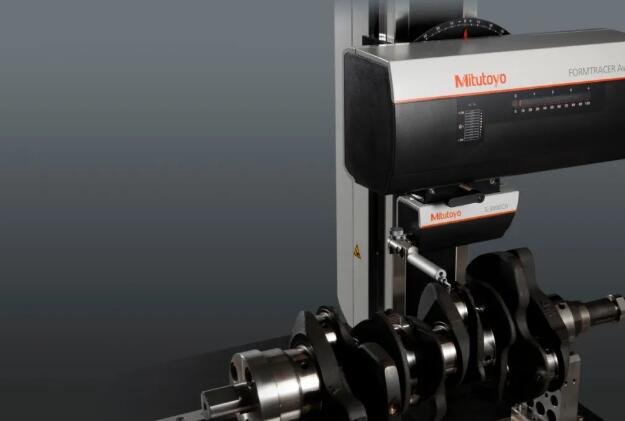
Formtracer Avant series
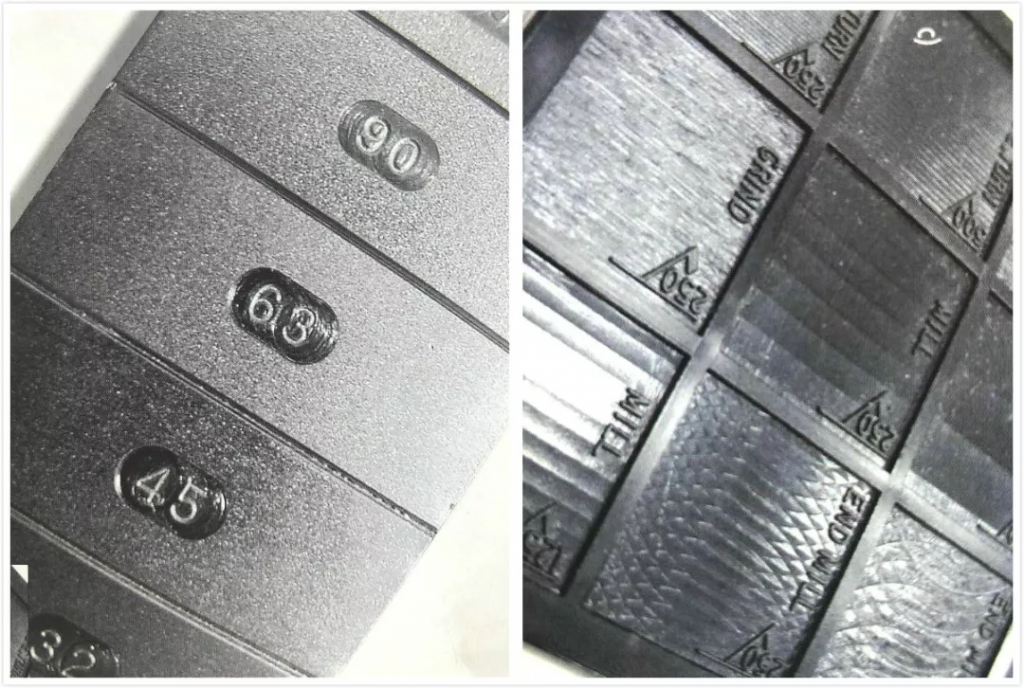
The evaluation of surface roughness is increasingly valued in the manufacturing industry. To study the surface roughness, you need to use a special machine, named: surface roughness measuring instrument. Most of the correct and complete surface roughness measurement methods, although they use a dedicated measuring machine, but in some cases, for quick and low-cost operation, you can also use hand-held kit tools to measure, as shown below:
The roughness comparison sheet is a nickel-based sample made by electroforming. It is ideal for metal processing and is a very effective auxiliary tool.
The functions that can be achieved by the roughness measuring machine are different, the evaluation method is different, and the cost is also different. Choose the most suitable model according to needs of stainless steel pipe fittings supplier.
Duplex Stainless Steel Pipe for Nuclear Power Cooling Water System As a clean energy, nuclear power is a major contributor to global carbon emissions reduction, and it can play a greater role in the future. Duplex stainless steel pipe for cooling water system is the future. The key factor for the safe operation of nuclear power plants is the cooling water piping system. This complex system contains thousands of feet of pipes with diameters ranging from large to small, and its function is to provide reliable water supply for the cooling of nuclear power plant equipment. There is usually a non-safety-level operating system and a safety-level emergency system. Non-safety-grade piping systems must provide sufficient cooling water for normal cooling of nuclear power equipment. The safety-level system must provide sufficient cooling water to keep the reactor under control and shut down safely in an emergency. The piping materials used in these systems must be resistant to corrosio...
Brief introduction of crevice corrosion test project Crevice corrosion is the phenomenon that metal surfaces form gaps due to the presence of foreign objects or structural reasons, resulting in accelerated metal corrosion in the gaps. The width of the slit or gap that causes crevice corrosion must be sufficient to allow the medium to enter and stay in it. When the crevice width is between 25 and 100 μm, it is the most sensitive range for crevice corrosion. In some wider crevices, the corrosive medium is easy flowing, crevice corrosion generally does not occur. The result of crevice corrosion will lead to a reduction in the strength of the component and a poor fit. The increase in the volume of corrosion products in the crevices will cause local additional stress, which not only makes assembly difficult, but may also reduce the bearing capacity of the component. Crevice corrosion of metals shows the following main features: (1) Whether it is the contact of the same or different...
Affected By The Covid-19 Epidemic, The Situation Of Stainless Steel Flanges Is Not Optimistic 1. Global financial market turmoil, stainless steel flange futures plunged After the Chinese New Year, in the category of commodities related to economic growth, the strongest asset is the stainless steel flange. WN Flange As the overseas epidemic became more serious, Chinese finished product exports were affected. The domestic production of stainless steel flanges continues to pick up sharply, and the pressure of destocking is still relatively large. The oversupply of finished materials is a foregone conclusion. On the 27th, the Politburo meeting pointed out that it is necessary to speed up the issuance and use of local government special bonds, increase the fiscal deficit rate, and guide the loan market interest rate to fall, which will be beneficial to the restoration of confidence in the stainless steel flange market. However, Monday's futures still weakened signif...



评论
发表评论